
Reviewed · NORTH QATAR TOURS
Olafur Eliasson, Al Jumail, Al Ruwais & Al Zubarah Tour
Northern Qatar trades Doha’s polished towers for open desert, old stone walls, sea air, and a striking work of modern art by Olafur Eliasson. In one 270-minute outing, you move from a contemporary desert installation to the remains of a former pearl-trade village and the UNESCO-listed Al Zubarah Fort.
I like the way this tour brings together art and Qatari history, rather than treating them as separate subjects. I also like the easy hotel pickup, air-conditioned transport, tea, and water, plus guides such as Javid, Amir, Sadiq, and Sadek, who have helped guests understand the country beyond Doha.
The main drawback is the distance. Reaching the far north takes about an hour from Doha, so a good part of this half-day trip is spent in the vehicle. At $70 per person, the value is fair for a guided private-style outing, though one past guest felt it was expensive.
Key points to know before heading north
- Olafur Eliasson’s desert artwork gives you a rare chance to see contemporary art in Qatar’s open desert setting.
- Al Jumail offers a quiet look at an abandoned settlement linked to the country’s old pearl-trade economy.
- Al Zubarah Fort connects the outing to Qatar’s trading past and UNESCO-recognized archaeology.
- Al Ruwais slows the pace with sea views and a traditional coastal character.
- Guides make a real difference, with Javid, Amir, Sadiq, and Sadek praised for stories, humor, and help with photographs.
- The $70 price includes transport and guiding, but meals and museum entrance fees are extra.
Why this northern Qatar route is worth your time
Doha can make Qatar seem like a country of new museums, luxury hotels, and glass towers. This trip corrects that impression. You spend the day looking at places shaped by trade, fishing, settlement, archaeology, and the desert itself.
I like the route because the stops do not all tell the same story. The art installation asks you to think about nature and perception. Al Jumail shows what remains when a village is left behind. Al Zubarah puts Qatar’s commercial past into a formal historic setting. Al Ruwais finishes with the sea and a quieter daily rhythm.
That variety makes this a useful choice if you have already seen the main sights in Doha. It also suits you if you want context for Qatar rather than another short city tour. The trip is not built around shopping, entertainment, or a long meal. Its appeal is the succession of places and the conversation in the vehicle between them.
More trips north of Doha:
- From Doha: North of Qatar Guided Tour with Transfers
★ 4.9 · 539 reviews - North Qatar Half-Day Tour: Al Zubarah, Purple Island & Mangroves
★ 5.0 · 337 reviews - North Qatar Tour | Zubara Fort | Purple Island | Mangros Colony
★ 5.0 · 323 reviews
The long ride from Doha to the far north
Hotel pickup and drop-off keep the day simple. You do not need to arrange a rental car or work out the route yourself, and the air-conditioned vehicle matters in Qatar, especially when you move between hot outdoor sites.
Plan for roughly an hour on the road before reaching the northern part of the country. That is not wasted time if your guide uses it well. Sadiq and Sadek, for example, were praised for explaining Qatari society and culture during the drive, while Amir was remembered for his sense of timing and lively conversation.
The drive is also the practical trade-off. Four and a half hours sounds generous, but the route covers several distant places. You will not get the slow, unhurried pace of a full-day archaeological visit. You get a broad introduction instead, with enough time at each stop to look around, take photographs, and hear the main story.
Bring your passport or ID card, as well as comfortable shoes. Tea and water are provided, but meals are not included unless you choose an available add-on. Food add-ons are unavailable during Ramadan, which is expected to run from March 1 through March 31, 2025, according to the supplied schedule.
Olafur Eliasson’s art in the desert
The first major stop pairs modern creativity with Qatar’s open desert. Olafur Eliasson’s installation is designed to be seen in relation to its setting, so you are not simply entering a gallery and looking at an object on a wall.
I find this a strong opening because it changes how you look at the desert. The work encourages you to notice space, light, scale, and the connection between a human-made idea and the natural surroundings. It also gives you photographs that feel different from the usual Doha skyline images.
This stop will suit you best if you enjoy art that leaves room for your own reaction. If you prefer detailed historical displays, it may feel less direct. The guide helps by explaining the work and its place in Qatar, but you should expect an outdoor art experience rather than a conventional museum visit.
The setting also means you should wear shoes that can handle uneven ground. The tour does not promise museum entry, and museum entrance fees are not included, so check what applies to your selected date if a paid indoor site is part of the schedule.
Al Jumail and the remains of a pearl-trade village
Al Jumail gives the tour its most immediate sense of abandonment. This former coastal settlement was linked to Qatar’s pearl-trade era, and its empty structures offer a plain reminder that many communities depended on the sea before the country’s modern growth.
You will not find a polished historic district here. That is the point. The remains are a visual record of a settlement that no longer functions as a village, and the quiet surroundings let you focus on the shape of the buildings and the relationship between the old community and the coast.
I would give this stop extra attention if you want to understand Qatar outside its modern capital. The location makes the past feel physical. Instead of hearing only about pearl work and coastal life, you see the type of place where that economy once supported families.
The condition of an abandoned village can also be a limitation. Do not expect a large visitor center, a long series of indoor exhibits, or a fully restored old town. Much of the value comes from walking, looking carefully, and asking your guide questions.
Javid was praised for sharing useful information about the sites and for helping with photographs and videos. That kind of help matters at Al Jumail, where a good explanation can turn a group of old walls into a more meaningful stop.
A completely different kind of day, same short drive:
- Doha: Safari, ATV, Camels, Sandboarding and Inland Sea Tour
★ 4.8 · 5,291 reviews - Doha: ATV, Quad/Buggy Dune Bashing, Camel Ride, Sandboarding
★ 5.0 · 3,784 reviews - Desert safari, Dune bashing, sandboarding, camel, ATV Option
★ 5.0 · 2,826 reviews - Qatar Gold Dune Safari, Dune Bashing,Camel Ride,Sand Boarding,Inland Sea Desert
★ 5.0 · 2,807 reviews
Al Zubarah Fort and Qatar’s trading past
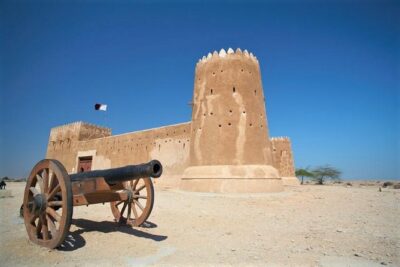
Al Zubarah Fort gives the journey a clearer historical anchor. The fort is connected to Al Zubarah’s archaeological importance and is part of the UNESCO World Heritage setting, making it one of the most significant stops on the route.
The fort’s appeal is its sense of order and preservation. After the open, broken remains of Al Jumail, the strong walls and formal shape of the fort provide a sharper picture of how Qatar protected and organized important settlements.
I like the contrast between the two sites. Al Jumail shows a village left to time. Al Zubarah Fort gives you a more defined structure through which to consider trade, security, and regional connections. Together, they make the north feel like a place with a long story, not an empty stretch beyond Doha.
Your guide is important here because a fort can be easy to photograph and easy to misunderstand. Ask about its role, the nearby archaeological area, and how it fits into Qatar’s trading past. Anne, one of the guests praised for the outing, found the archaeological site, fort, village, and art installation an especially strong combination.
The supplied details do not include a separate museum entry price or guarantee a specific museum visit. Museum fees are not included, so confirm the day’s exact arrangements before you book if indoor displays are essential to you.
Al Ruwais brings in the sea air
Al Ruwais provides a gentler final stop. This quiet coastal city is known here for seaside views and traditional fishing culture, and it offers a change after the desert and historic sites.
I like ending by the water. The tour begins with an idea-driven artwork, moves through abandoned and historic places, and finishes with a living coastal setting. Al Ruwais gives you space to slow down, take photographs, and think about how much of Qatar’s identity is tied to the coast.
Do not expect the scale or activity of Doha’s waterfront. The appeal is calm rather than spectacle. If you want a busy market, a long lunch, or a packed program of attractions, this stop may feel too quiet. If you value a pause and a wide sea view, it works well.
The coastal stop also helps prevent the tour from becoming a series of ruins. You see evidence of the past, then finish in a place associated with everyday fishing life. That balance gives the route more range than a fort-only excursion.
How much value do you get for $70?
At $70 per person, this is not the cheapest possible way to see northern Qatar, but the price covers several useful pieces: hotel pickup and drop-off, an air-conditioned vehicle, an English-speaking guide, tea, and water.
The value depends on what you would otherwise have to arrange. If you would need a rental car, navigation, fuel, and separate research for four distant sites, the price becomes easier to justify. You are also paying for the guide’s explanations and for a route that joins art, archaeology, an abandoned village, and the coast in one outing.
The price feels less attractive if you mainly want one site and prefer to spend hours there. This is a survey of northern Qatar, not a slow specialist visit to Al Zubarah. One guest considered it expensive, though that person also noted difficulty finding a much cheaper alternative.
Private group availability can improve the value for couples, families, or small groups who want a more personal outing. The public details do not state the standard group size, so ask the provider if group composition matters to you.
The guide can shape the whole day
The strongest human element is the guide. The named guides connected with positive experiences include Javid, Amir, Sadiq, Sadek, and Bilal. Their reported strengths vary, but the pattern is clear: the best version of this trip depends on someone who explains the sites, talks about local society, and helps you make the most of the stops.
Javid was especially appreciated for his kindness, useful stories, and help with photographs and videos. Amir was praised for good timing, stories about the land and its people, and a cheerful manner. Sadiq and Sadek were noted for giving a wider cultural picture during the long drive, while Bilal was thanked for explaining and showing the sites clearly.
I would not choose this outing only for the vehicle transfer. Choose it because you want a guide to connect the pieces. The north does not always explain itself at a glance, especially at Al Jumail and the art installation.
The tour is in English. That matters if you want a running explanation rather than a simple driver transfer. It also means you should be comfortable asking questions in English if you want more detail at a particular stop.
Who should book this experience?
I would recommend it to you if you:
- Have already seen central Doha and want a wider view of Qatar.
- Enjoy the mix of contemporary art and old sites.
- Want an introduction to the country’s coastal and pearl-trade past.
- Prefer hotel pickup and a guide to driving yourself.
- Like taking photographs and want help finding good angles.
- Have a half-day available rather than a full day for a slower northern visit.
I would think twice if you dislike long drives, want a full meal included, or need every stop to offer a polished indoor exhibit. The tour includes several outdoor locations, so comfortable shoes and sensible protection from the sun are practical choices.
The route is also better for curious adults and older children who can appreciate ruins, art, and cultural explanation. The supplied information does not give a specific child policy, so families should confirm that point before booking.
Booking details worth checking
You can cancel up to 24 hours before departure for a full refund, and you can reserve now and pay later. Those terms help if your Doha schedule may change, though you should still check the starting time and availability for your chosen date.
Hotel pickup and drop-off are included, but the exact pickup window is not provided here. Confirm the meeting details after booking, especially if you are staying outside the usual Doha hotel area.
Meals are not included unless selected as an add-on. During Ramadan, meals are unavailable under the stated conditions, so plan ahead rather than counting on food during the trip.
Should you book this northern Qatar tour?
Book it if you want to see the side of Qatar that lies beyond Doha’s modern center. The combination of Olafur Eliasson’s desert artwork, Al Jumail’s abandoned coastal settlement, Al Zubarah Fort, and Al Ruwais gives you four different ways to look at the country.
I would call it good value for a guided introduction, not a bargain and not a specialist archaeological expedition. The hour-long journey north is the price of admission in time, but the air-conditioned transfer and strong guides make that easier.
If your interests run toward art, old settlements, coastal life, and Qatar’s trading past, this is one of the more varied half-day choices available. If you want maximum time at one archaeological site, rent a car or seek a longer dedicated visit instead.
FAQ
Where does the tour begin and end?
The tour includes pickup in Doha and returns you to Doha.
How long does the experience last?
The stated duration is 270 minutes, or four and a half hours.
What language is the tour conducted in?
The live tour guide speaks English.
Is hotel transportation included?
Yes. Hotel pickup and drop-off are included, along with an air-conditioned vehicle.
What places does the tour visit?
The route includes Olafur Eliasson’s desert artwork, Al Jumail, Al Zubarah Fort, and Al Ruwais.
Is Al Zubarah Fort a UNESCO site?
Yes. Al Zubarah Fort is described as part of a UNESCO World Heritage setting.
Are meals included?
Meals are not included unless you select an available add-on. Meal add-ons are unavailable during Ramadan under the stated tour conditions.
What should I bring?
Bring your passport or ID card and comfortable shoes.
Can I cancel or pay later?
You can cancel up to 24 hours in advance for a full refund. You can also reserve now and pay later, subject to the booking terms.
New reviews around Qatar
- Doha : Private North of Qatar Tour, Zubara Fort & Mangroves★ 4.4 · 3 reviews
- Katara Cultural Village Doha★ 5.0 · 3 reviews
- Doha: JetSki Experience at Al Corniche With Transfer★ 5.0 · 3 reviews
- Guided Doha Sightseen Tour By Certified Tour Guide (Private Tour)★ 5.0 · 3 reviews
- Qatar’s Skybound Adventure: Exclusive Private Paratrike tour★ 5.0 · 3 reviews
- Qatar Transit: Private Doha City Highlights And Dhow Cruise★ 5.0 · 3 reviews
- Doha Highlights Guided Tour With Dhow Cruise★ 5.0 · 3 reviews
- Doha: Guided City Tour with Pickup and Drop-Off★ 5.0 · 3 reviews
North Qatar Tours, compared.
North Qatar Half-Day Tour: Al Zubarah, Purple Island & Mangroves
Read our review →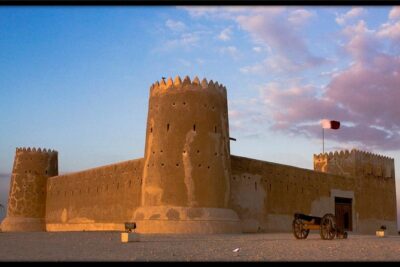
North Qatar Tour | Zubara Fort | Purple Island | Mangros Colony
Read our review →
Doha North Qatar Tour Zubara Fort, Mangroves, Jumail Village
Read our review →North Qatar Guide Expedition with Pickup & Drop-Off
Read our review →
North of Qatar Tour to Olafur Eliasson Zubara Fort Jumail Village
Read our review →
Private North of Qatar: Zubara Fort | Jumail Village | Al-Thakhira Mangroves
Read our review →Browse the lists this tour appears in