
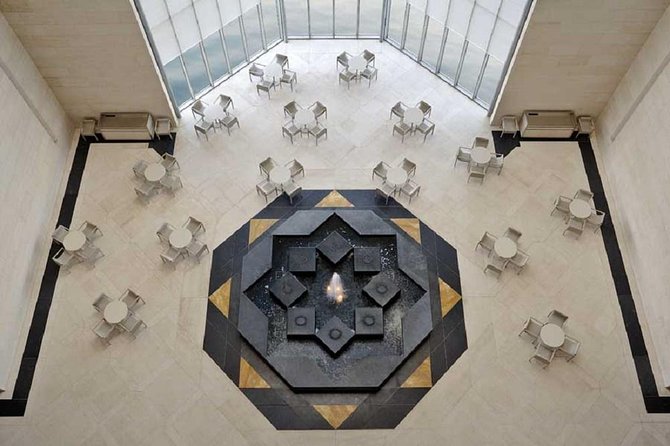
Reviewed · MUSEUM OF ISLAMIC ART TICKETS
4-Hour Private Museum of Islamic Art in Qatar Tour
The building is the first great exhibit. Designed as a cubistic pyramid beside Doha’s water, the Museum of Islamic Art gives you bold architecture, calm sea views, and centuries of Islamic art in one stop. I like the private car and the chance to hear about Doha during the drive, especially if Ali is your guide. The main catch is that the $135 price does not include the roughly $14 museum ticket.
I also like the collection’s range. You can move from seventh-century coins and Qur’anic manuscripts to glittering glass, carpets, carved wood, jewelry, and ceramics without racing across the city. Allow close to four hours for the full outing, though the museum portion itself may take about two hours if you keep a steady pace.
Key points at a glance
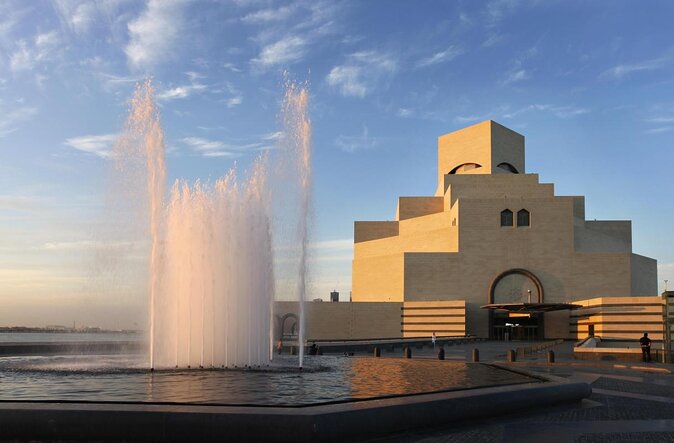
- I. M. Pei architecture: The museum’s pale geometric form and waterfront terraces are as important as the galleries.
- Private transportation: Your group rides privately, with pickup offered and no strangers joining your party.
- Centuries of objects: Look for manuscripts, gold and silver coins, ceramics, glass, jewelry, textiles, woodwork, and metalwork.
- Rare manuscript collection: More than 800 manuscripts range from seventh-century Qur’ans to Ottoman works from the 19th century.
- Good family potential: Large displays and interactive elements can help children follow the story, though the art galleries suit patient museumgoers best.
- Simple planning: Mobile tickets, group discounts, and free cancellation up to 24 hours before departure make booking fairly flexible.
Why this Doha museum deserves a half-day
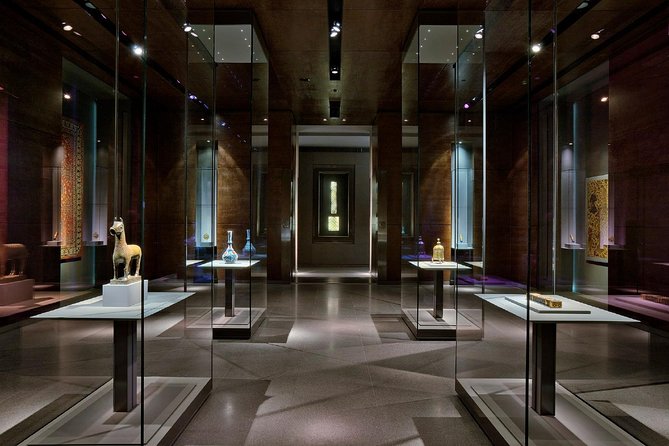
I would choose this tour when I wanted one strong cultural stop in Doha without arranging taxis, admission, and a guide separately. The museum gives you three experiences at once: a major art collection, a remarkable building, and an open view toward the city and Gulf.
The collection was assembled from the late 1980s onward, but its objects cover a much longer span. That distinction matters. This is not mainly a museum about modern Qatar. It is a museum about Islamic art across many centuries and regions, with Qatar providing the setting.
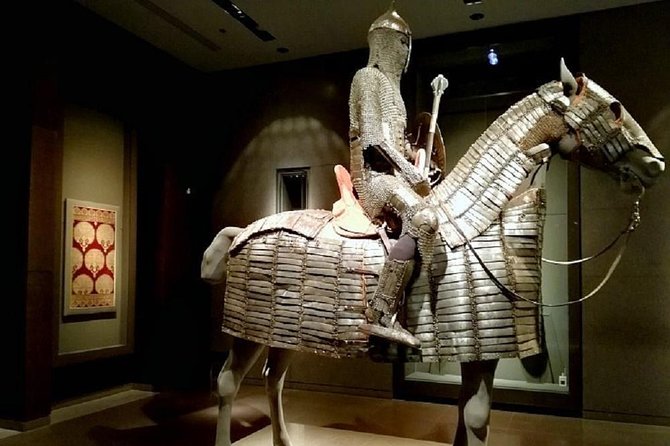
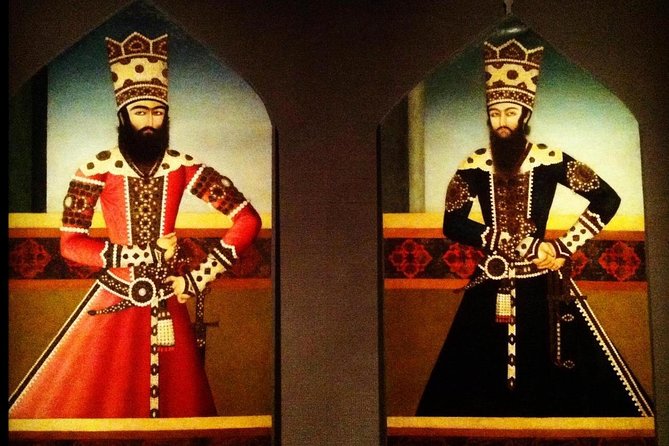
You will see objects linked to faith, learning, court life, trade, craftsmanship, and daily use. A coin can tell you about a ruler and an economy. A manuscript can show how writing and devotion were treated. A ceramic bowl or textile can reveal how patterns, materials, and techniques moved between places.
That broad reach is also the museum’s one challenge. If you expect a simple story about Qatar, you may find the galleries more international and less locally focused than expected. The collection asks you to compare objects across time rather than follow one straight national story.
More Museum of Islamic Art visits:
- Doha: Museum of Islamic Art Admission Ticket
★ 4.7 · 178 reviews - Doha: Iconic Sights, Culture & Museum of Islamic Art Tour
★ 5.0 · 43 reviews - Doha: Guided City Tour with Museum of Islamic Art Visit
★ 5.0 · 12 reviews
The first stop is the building itself
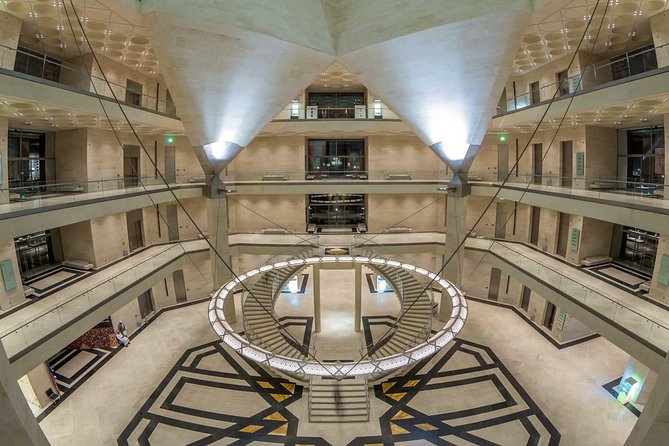
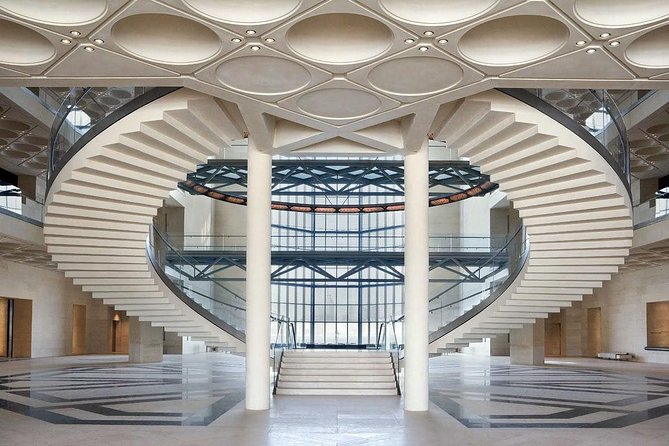
The Museum of Islamic Art rises from the waterfront in a pale, angular form. Its stacked geometric shapes give it a strong silhouette, especially when seen against the sea and Doha’s modern skyline.
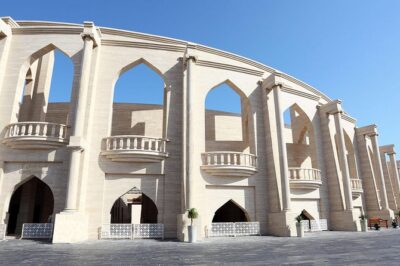
I would not hurry through the approach. The outdoor area, arches, terraces, and water views help you understand the building before you enter the galleries. The exterior is particularly useful for photographs, but it is not only a photo stop. It sets up the museum’s central idea: Islamic design can be spare, mathematical, and grand without relying on excessive decoration.
From the terraces, you can look across the water toward Doha’s towers. The contrast between old artistic traditions and the city’s modern ambition is immediate. It is one of the clearest visual ways to understand Qatar’s effort to honor the past while building a highly modern capital.
The waterfront can be intensely hot, so treat the outdoor portion as a short architectural walk rather than a long stroll, especially in warm weather. Comfortable clothing and sensible shoes will make the transition from the grounds to the galleries easier.
What your private four-hour outing includes
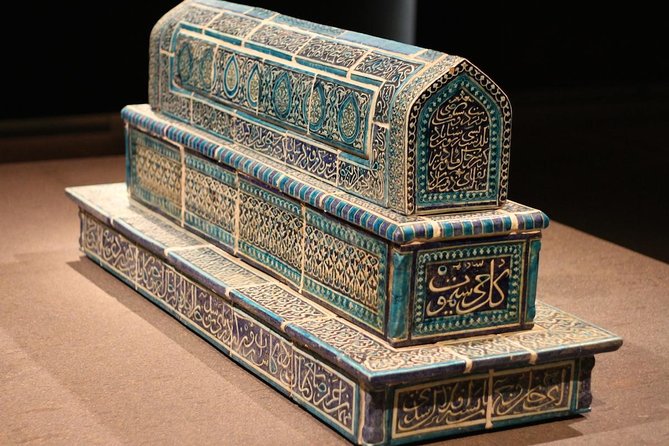
The experience lasts about four hours, with roughly three hours listed for the museum stop. In practice, that gives you time for pickup, the drive, museum entry, a guided visit, and some breathing room around the exhibits.
Private transportation is the main practical advantage. Your group travels alone, so you can ask questions, adjust the pace, or spend longer in a gallery without waiting for a large coach party. That matters in a museum where some objects reward a slow look and others can be passed quickly.
A guide named Ali is associated with the experience. His role includes more than pointing out the entrance. During the drive, he can provide facts about Doha and its development, which helps connect the museum visit to the city outside the windows.
Do not assume the private format means every minute is individually customized. The supplied details confirm private transportation and a private group, but they do not promise a special-access route or a fully bespoke museum lecture. I would think of it as a private guided visit with a practical city transfer.
The museum admission is separate. At $135 per person, this is not a budget museum outing once the approximately $14 entry charge is added. The value improves for people who want a private vehicle and guide, or for families and small groups who would rather not coordinate transport themselves. If you only want to see the building and spend an hour inside, arranging your own visit may cost less.
Manuscripts and the written word
The manuscript collection is one of the museum’s strongest reasons to visit. It contains more than 800 manuscripts, ranging from seventh-century Qur’ans to Ottoman works from the 19th century.
Even if you are not a specialist in Arabic calligraphy, you can appreciate the care given to the page. Look at the script, spacing, ornament, and the way the text is arranged. These details show that a manuscript is not simply a container for words. It is also a crafted object shaped by belief, scholarship, materials, and patronage.
The time span is especially useful. A seventh-century Qur’an and a later Ottoman manuscript do not belong to the same visual world. Seeing them within one museum lets you notice changes in writing, decoration, layout, and production.
I would ask the guide to explain how the manuscripts were made and used, rather than only identifying their dates. That kind of context turns a glass case into a glimpse of the people who copied, commissioned, read, protected, and passed down these works.
A few more Doha trips worth the drive
- National Museum of Qatar: Admission Ticket
★ 4.7 · 514 reviews - Half-Day Wonders of Doha: Culture, Skylines, Museums & Souqs
★ 5.0 · 97 reviews - Doha Night City Tour | Souq Waqif | National Museum | The Pearl | Katara Village
★ 5.0 · 50 reviews - Doha: Visit Souq Waqif, Katara, Pearl, Museum, Cornishe
★ 5.0 · 20 reviews
Coins that make history personal
The rare gold and silver coins deserve more attention than their small size suggests. Coins can seem less dramatic than a jewel or a brightly colored ceramic vessel, but they offer a direct look at power, money, trade, and public identity.
The collection includes coins dating from the seventh century onward. Their inscriptions and designs can help you see how Muslim rulers presented authority and how monetary systems changed over time.
This is a good section for a guide’s explanation. Without context, a coin may look like a tiny disk behind glass. With context, you can consider who issued it, where it circulated, what it could buy, and how its symbols reached ordinary people.
Bring patience and good eyesight. Small objects reward close attention, but they are not the best part of the museum if you prefer sweeping decoration or large displays. I would pair the coin gallery with the manuscripts, since both make the passage of time feel concrete.
Glass, ceramics, jewelry, and metalwork
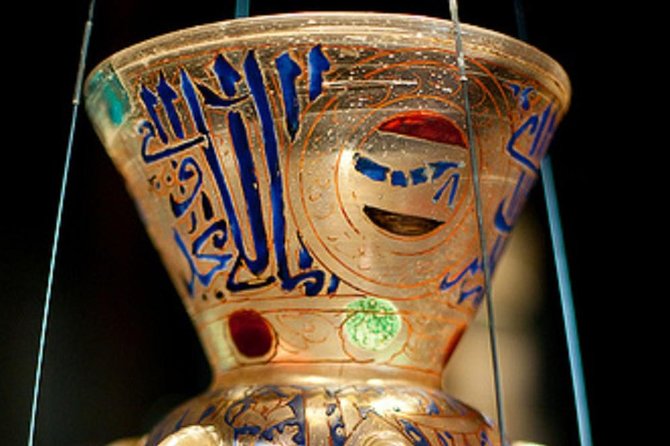
The glass collection gives the museum some of its most immediate color. It includes enameled glass in several hues, along with cut, molded, and simpler pieces. The range shows that Islamic glassmaking was not one fixed style.
Enameled pieces may catch your eye first, but do not skip the less ornate examples. Cut and molded glass can show how shape, light, and surface texture create beauty without heavy decoration. The display also makes a useful point about technical skill. Fine work does not always need bright color or precious materials.
Ceramics offer another way to track design across periods and places. Look for repeated geometric forms, plant-inspired details, and calligraphic decoration. Some pieces may feel formal, while others suggest use at a table or in a household.
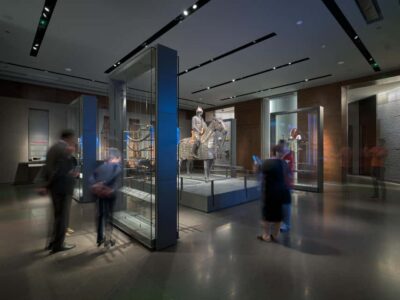
Jewelry, metalwork, and carved wood add a more tactile sense of Islamic art. These objects connect courtly display with daily life. A piece may be precious because of its material, its workmanship, its inscription, or the social setting in which it was used.
The collection also includes textiles and fabric. These can be easy to overlook in a museum full of shiny metal and glass, but they carry patterns and techniques that appear elsewhere in the galleries. If you enjoy design, compare textile motifs with the shapes on ceramics, wood, and architectural details.
How the museum works for families
The museum can suit families, but the experience depends on how your children respond to objects behind glass. Large displays and interactive elements can make the story of Qatar easier for children to follow, though the Museum of Islamic Art itself focuses on Islamic art rather than a complete national history of Qatar.
The private format helps here. You can pause when children show interest, move on when attention fades, and ask the guide to explain an object in simpler terms. A fixed large-group schedule would give you less freedom.
I would set a modest goal rather than trying to absorb every label. Choose a few themes: writing, coins, glass, geometric design, and objects used in daily life. That approach keeps the visit lively and gives children something specific to look for.
Families should also remember the outdoor spaces. The arches and waterfront views provide a change of pace between indoor galleries, though heat may limit how long you stay outside.
Allow time for the café and city views
The museum’s café is a useful pause if you need one. It has views toward Doha’s skyline, and the setting can extend the visit without adding another stop to the day.
A restaurant on the top floor may not always be open, so do not build your plans around that option. The café can also fill up, which means you may need patience when looking for a table.
I see the café as a bonus, not the main reason to book. The building and galleries carry the experience. Still, a drink or light meal with the skyline beyond the windows can make the visit feel less rushed.
If you are on a short Doha stopover, this combination of museum, architecture, water, and skyline is efficient. You get a cultural visit and strong city views in one location, with private transport reducing the need to organize several separate stops.
Dress and visiting etiquette
Appropriate clothing is important. The museum is devoted to Islamic art, and modest dress is the sensible choice for entering a religiously connected cultural setting.
You do not need to treat the museum as a formal ceremony, but I would avoid beachwear and choose clothing that covers the shoulders and knees. This also makes it easier to move from the air-conditioned galleries to Doha’s hot outdoor spaces.
Take your time with the objects. Do not reduce the visit to a hunt for the most photogenic piece. The best moments often come from comparing a simple molded glass vessel with an elaborate enameled one, or seeing how geometric patterns recur across different materials.
Photography may be tempting in the building and on the terraces, but your attention is better spent looking closely at the displays and listening to the guide’s explanations.
Who gets the best value from $135
At $135 per person, plus the museum ticket, this is a premium way to visit one museum. The cost makes the most sense if you value privacy, pickup, transport, and a guide who can add Doha context during the drive.
I would recommend it for:
- Couples wanting a comfortable private cultural outing
- Families who need control over the pace
- Small groups that can benefit from group discounts
- First-time visitors who want an easy introduction to Doha
- People with limited time who prefer one organized stop
- Museum fans interested in manuscripts, coins, glass, and decorative arts
I would hesitate if you are comfortable using public transport, already know Doha well, or want to spend only an hour in the museum. The museum is easy to appreciate without a private tour, and the ticket itself is modest compared with the full tour price.
The rating is strong at 4.7 from 15 ratings, with 93 percent recommending the experience. That is encouraging, though the sample is small. The praise centers on the building, the collection, the views, and the guide’s clear help during the drive. One blunt negative response also shows that Islamic art will not appeal to everyone. Personal taste matters here.
Booking, cancellation, and practical timing
Confirmation usually arrives at booking. If you book within two days of departure, confirmation may take up to 48 hours and remains subject to availability.
Free cancellation is available up to 24 hours before the start time for a full refund. Changes or cancellations inside that 24-hour window are not accepted for a refund, and the cut-off follows local Qatar time.
Most people can take part, and only your group participates. Pickup is offered, but the supplied details do not specify every pickup area or the exact meeting procedure, so check those points before paying.
The tour is booked about 12 days ahead on average. That is not a guarantee of limited space, but it suggests you should reserve ahead if your Doha schedule is fixed, especially if you want a private vehicle at a particular time.
Should you book this museum tour?
Book it if you want the Museum of Islamic Art to be more than a quick photo stop. The private ride, possible guidance from Ali, wide-ranging collection, and waterfront setting create a polished half-day outing with little planning on your part.
Skip it if your main goal is low cost or a short self-guided museum visit. You will pay a premium for privacy and transport, and the museum ticket is extra.
My call: this is a good choice for first-time Doha visitors, families, and small groups who value ease and explanation. Give it close to four hours, dress modestly, budget for the separate admission, and save time for the terraces. That is where the museum’s art, architecture, sea, and modern Doha come together best.
FAQ
How long does the tour last?
The experience lasts approximately four hours. The museum stop is listed as about three hours, with the remaining time allowing for transportation and the overall outing.
Is museum admission included in the tour price?
No. The tour price is $135 per person, and the Museum of Islamic Art ticket costs about $14 separately.
Is transportation provided?
Yes. Private transportation and pickup are included, along with taxes.
Is this a private group experience?
Yes. Only your group participates in the activity.
Can most people participate?
Yes. The information states that most travelers can participate.
Can I cancel for a full refund?
Yes, if you cancel at least 24 hours before the experience start time. Cancellations or changes made less than 24 hours before departure are not accepted for a refund.
New reviews around Doha
- Katara Cultural Village Doha★ 5.0 · 3 reviews
- Doha: JetSki Experience at Al Corniche With Transfer★ 5.0 · 3 reviews
- Guided Doha Sightseen Tour By Certified Tour Guide (Private Tour)★ 5.0 · 3 reviews
- Doha Highlights Guided Tour With Dhow Cruise★ 5.0 · 3 reviews
- Qatar Transit: Private Doha City Highlights And Dhow Cruise★ 5.0 · 3 reviews
- Doha: Guided City Tour with Pickup and Drop-Off★ 5.0 · 3 reviews
- Exclusive Doha Private Dhowcruise & Cornichewalk With Sunset★ 3.3 · 3 reviews
- Qatar: Paratrike Air Tour with Hotel Transfers★ 5.0 · 3 reviews
Museum of Islamic Art Tickets, compared.
Iconic Sights, Culture & Museum of Islamic Art Tour
Read our review →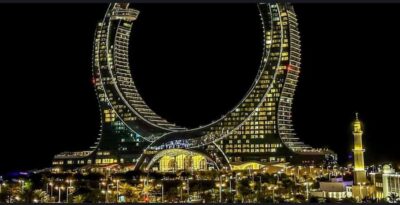
Guided City Tour with Museum of Islamic Art Visit
Read our review →Browse the lists this tour appears in